
Local Plumbers Toronto
Sewer line repair without unnecessary digging
From root intrusion in older clay laterals to full line replacement, we diagnose the real problem before recommending how to fix it.
Email Us for a Free Estimate
Why sewer laterals fail across Toronto's older neighbourhoods
Many of Toronto's established neighbourhoods, from the Annex to parts of Scarborough, still rely on original clay tile or early cast iron sewer laterals running from the home to the municipal main. Mature street trees, while lovely, send roots seeking moisture straight into these older joints. Combined with decades of ground settling, that's the most common cause of the backups and slow drains we get called out for.
Root intrusion
Mature trees near older clay laterals are the single most common cause of recurring sewer backups we see.
Pipe bellying
Ground settling over decades can create a low spot in the line where waste collects instead of flowing through.
Joint separation
Older clay or cast iron sections can shift apart slightly at the joints, letting soil and roots in.
Aging cast iron corrosion
Interior corrosion narrows the pipe over time, similar to what happens with galvanized supply lines.
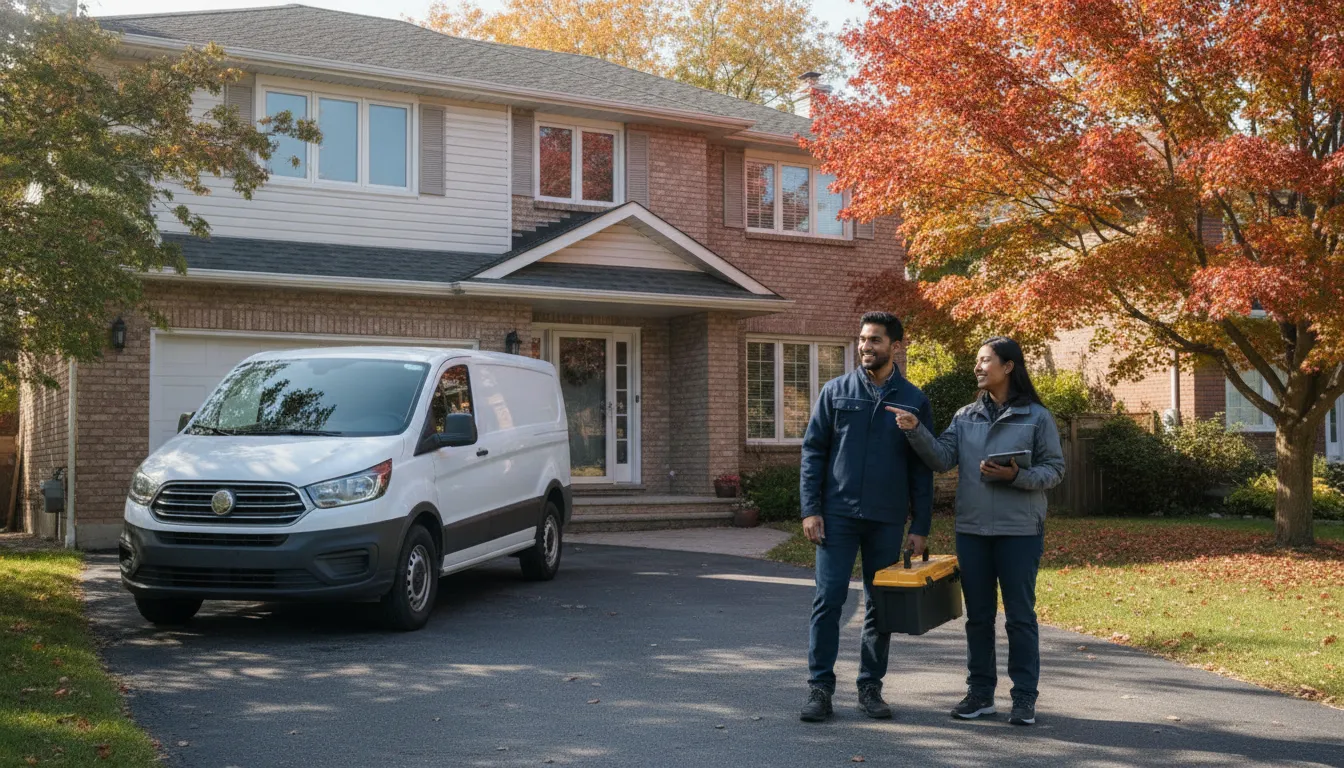
Recurring backups that clearing the drain doesn't actually solve
If your main line backs up every year around the same season, or multiple drains in the home back up at once, that usually points to a problem in the sewer lateral itself rather than an individual drain. Repeatedly snaking the same spot without addressing the underlying pipe issue just delays the next backup.
A camera-first approach to sewer repair
We inspect the line with a camera before recommending anything, so you know exactly what's wrong and where. Where the line and access allow it, we'll discuss trenchless repair options that avoid excavating your whole yard.
Common causes of sewer line problems we see across the GTA
A quick look at what typically brings us out for sewer line work.
Tree root intrusion
Roots find their way into joints seeking moisture, especially in older clay laterals.
Pipe bellying from ground settling
A sagging section of pipe collects waste instead of letting it flow through.
Joint separation
Sections of older pipe shift apart slightly over decades, letting debris and roots enter.
Grease and debris buildup
Years of buildup can narrow a line significantly even without structural damage.
Cast iron corrosion
Interior rusting reduces flow capacity gradually over the decades.
Ground freezing and shifting
Frost heave can move soil around older, shallower-laid lines.
Collapsed sections
Severely deteriorated older pipe can collapse entirely in a section, causing a full blockage.
Improper original grading
Some older installations were laid with insufficient slope, which causes chronic slow drainage.
Sewer line repair questions
How do you diagnose a sewer line problem?
We run a camera through the line first, which lets us see the exact location and nature of the issue before recommending a repair.
Do you always need to dig up the yard?
Not always. Depending on the pipe's condition and location, trenchless repair options can sometimes avoid full excavation.
Are tree roots really a common cause of sewer problems?
Yes, especially in older Toronto neighbourhoods with mature street trees and original clay laterals.
What are signs of a sewer line problem?
Multiple drains backing up at once, gurgling toilets, or sewage odours in the basement are all common indicators.
Do you handle sewer repairs across the GTA?
Yes, alongside Toronto we serve Peel, York, Halton and Durham Region.
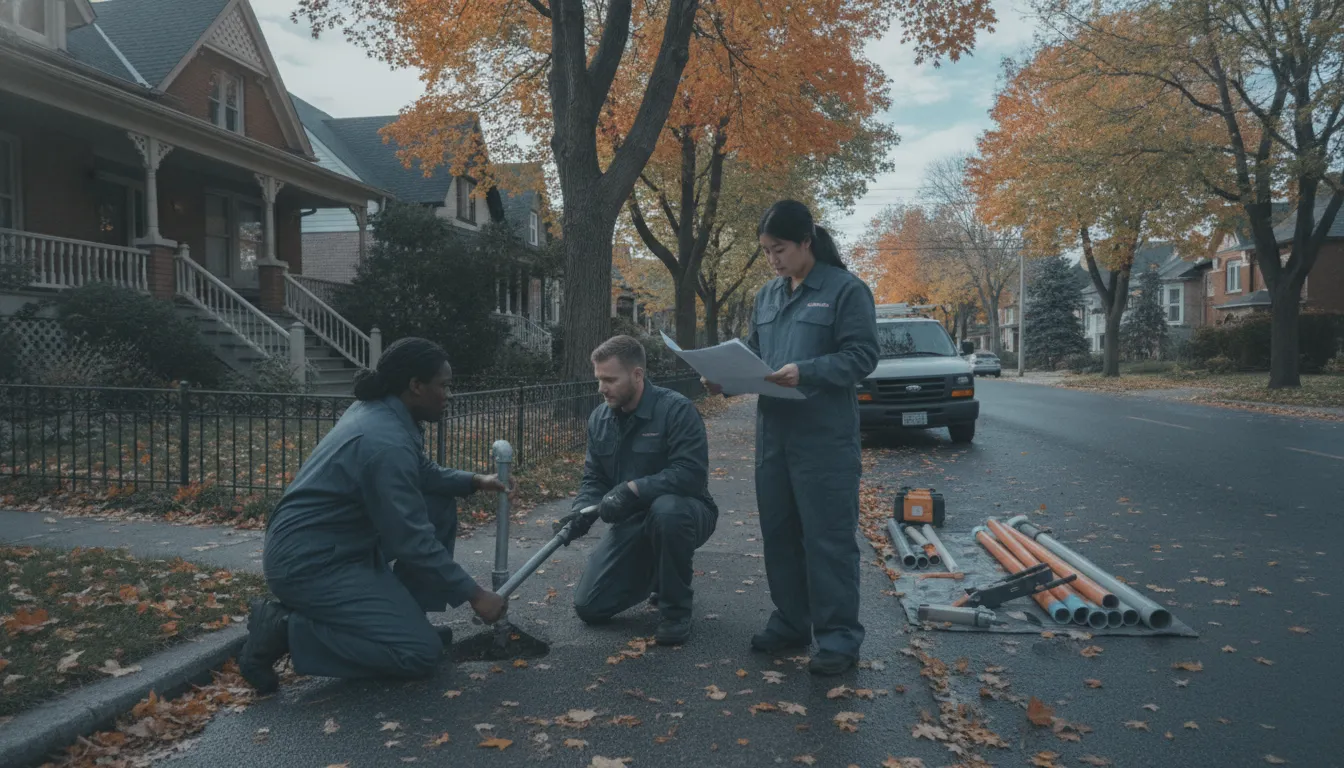
Dealing with a stubborn sewer backup
Email us what's happening and we'll help figure out what's really going on down there.
Email Us for a Free EstimateLocal conditions matter — email us for same-day service.
Fall home-service conditions in Toronto, ON
Fall around Toronto, ON is the season to prepare your home before winter sets in.
Proudly Serving Toronto, ON
Local, on-time service throughout Toronto and the surrounding area.